

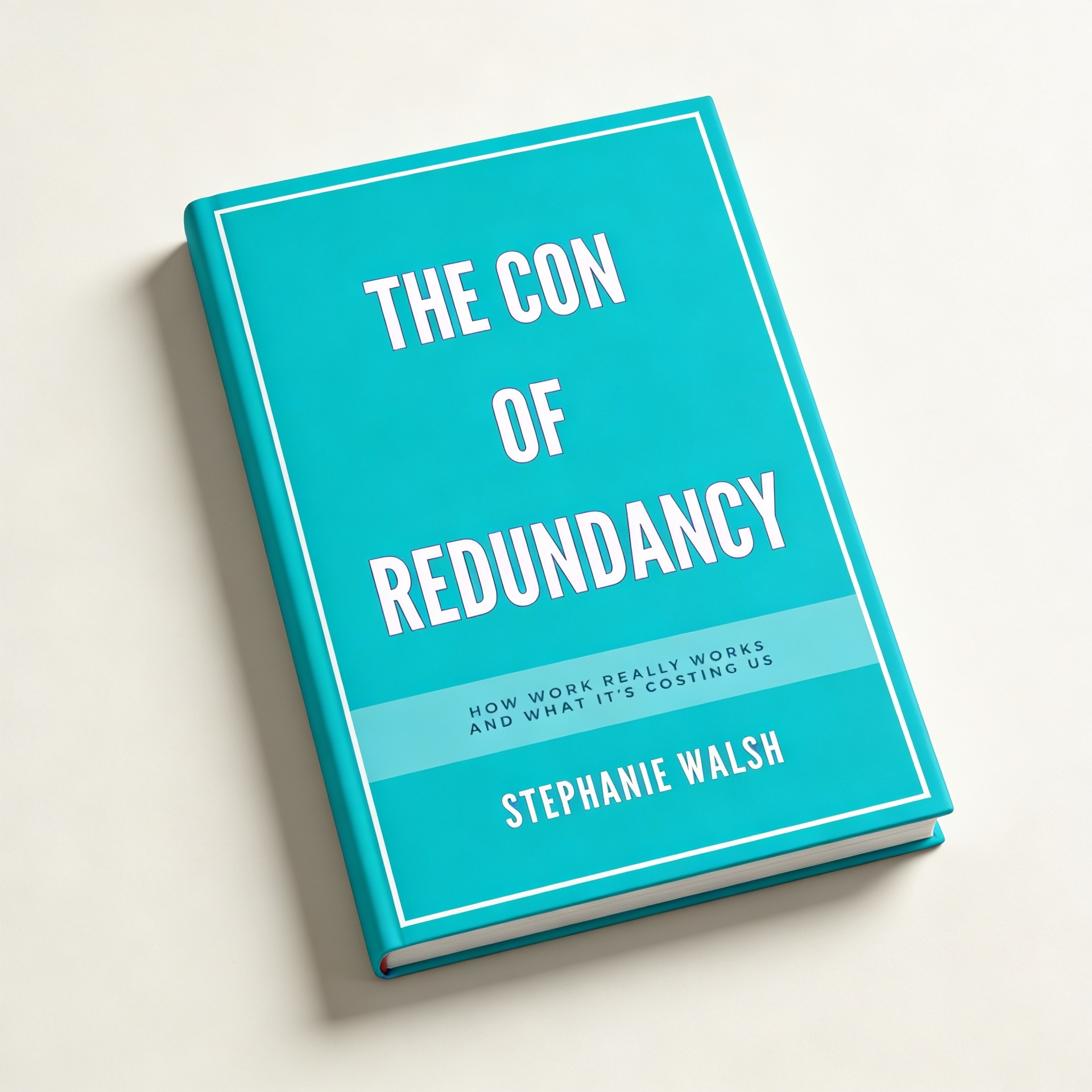
THE CON OF REDUNDANCY
HOW WORK REALLY WORKS AND WHAT IT’S COSTING US
2027
Read related essays and cultural criticism here
A work of cultural and structural analysis examining how redundancy is misread as personal failure—and what that misreading costs.
This book began in anger. That matters, because anger is routinely dismissed as a moral failure when it is, very often, a form of recognition. It arises when something has been tolerated for too long, explained away too often, or reframed so repeatedly that the harm it causes is no longer acknowledged, if it ever was. The anger that underpins this work is not oriented towards blame, but towards clarity: a way of seeing what polite language, forced optimism, and personal responsibility narratives are designed to obscure.
If you have experienced redundancy, you already understand more than you were allowed to say.
The Con of Redundancy is for people who have been told to treat professional abandonment as an opportunity, a lesson, a pivot, a gift, a branding problem, or a mindset issue, when what they were really experiencing was loss, danger, humiliation, disorientation and the force of structural power.
It is also for anyone trying to understand what modern work is doing to people: how employers shed responsibility, how hiring systems dehumanise applicants, how class and financial buffers shape outcomes, how “resilience” becomes an alibi, and how polite workplace language conceals the violence of being made disposable.
This is not a book about bouncing back. It is a book about taking back the language of what happened to you, and recognising harm when it has been politely renamed as opportunity, resilience, reinvention or personal failure.
CONTRIBUTE YOUR EXPERIENCE ANONYMOUSLY HERE